
Micron Earnings Ignite AI Optimism; Japan and South Korea Chip Stocks Rally Strongly
Keywords: Micron Technology, artificial intelligence, chip stocks, Japan and South Korea stock markets, HBM memory, semiconductor cycle
Introduction
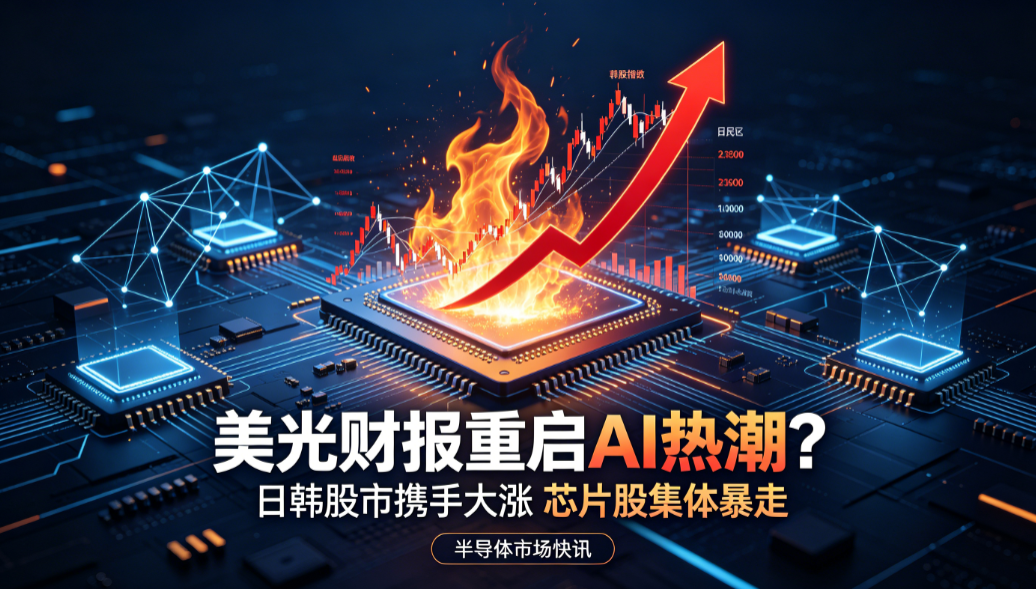
On Thursday morning, global semiconductor markets experienced a powerful "home run." As US memory giant Micron Technology released third fiscal quarter earnings far exceeding expectations, AI-driven optimism was reignited. In Asian trading, Japanese and South Korean stock markets reacted first, with chip stocks broadly surging, especially memory-related stocks. Analysts generally believe that continued expansion of AI infrastructure investment will keep high-bandwidth memory (HBM) supply tight for several years, possibly until 2030.
This article delves into Micron's key earnings data, real-time reactions from Japan and South Korea markets, and medium- to long-term supply-demand changes in the AI memory market, exploring the underlying logic of this semiconductor cycle.
Micron's 'Home Run' Earnings: Revenue and Gross Margin Beat Expectations
After the close on Wednesday, Micron reported third fiscal quarter results. Revenue reached $41.46 billion, well above market estimates of $35.3 billion, up 346% year-over-year from $9.3 billion. More notably, gross margin was an astonishing 84.9%, far surpassing forecasts. This figure reflects strong demand for high-value memory products from AI servers and highlights Micron's pricing power in HBM.
For the fourth fiscal quarter, Micron guided revenue of approximately $50 billion, again significantly exceeding analyst forecasts of $42.5 billion, compared to $11.3 billion in the same period last year. Management said AI data center demand for DRAM and NAND Flash is growing at an "unprecedented" pace, and customer inventory digestion is near completion, signaling a new restocking cycle.
In after-hours trading, Micron shares surged over 15%, driving memory-related ETFs higher. The Roundhill Memory ETF (DRAM) rose over 11% in after-hours, while the leveraged Roundhill T-REX 2X Long DRAM Daily Target ETF (RAM) jumped over 22%. Western Digital, Qualcomm, SanDisk, and other US chip stocks also posted double-digit gains, indicating market enthusiasm for AI memory themes spreading across the supply chain.
Japan and South Korea Markets Resonate: Chip Stocks Surge
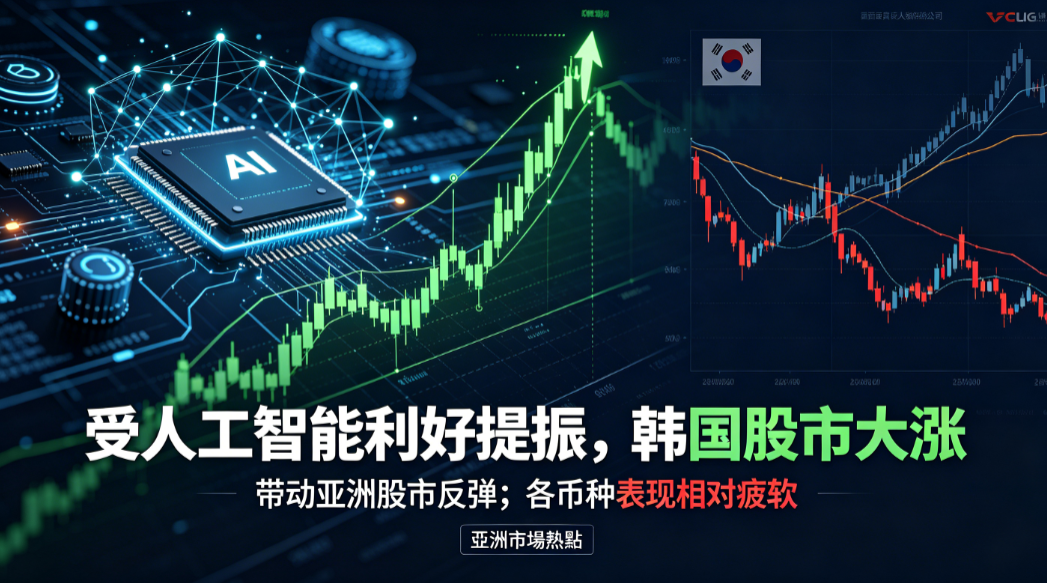
In Asian trading, Japan's Nikkei 225 opened up 1.36% and quickly expanded gains to nearly 4%. The TOPIX also rose 1.33% in early trade. At stock level, semiconductor test equipment leader Advantest surged over 12%, wafer dicing equipment maker Disco and memory giant Kioxia both rose over 8%. This rally benefited not only from spillover effects of Micron's earnings but also reflects the critical role of Japanese semiconductor equipment and materials companies in the global AI supply chain.
South Korea's market performance was more dramatic. The KOSPI opened at 8,703.42 points, up 2.74% from the previous day, then briefly broke above 8,900 points, with early gains exceeding 5%. Due to a 5% surge in KOSPI 200 futures, the Korea Exchange triggered a circuit breaker, suspending program trading for 5 minutes, reflecting strong buying and high sentiment.
The two memory giants, Samsung Electronics and SK Hynix, performed particularly well. As of writing, Samsung rose over 5%; SK Hynix gained over 11%. Notably, SK Hynix announced plans to list on the US stock market, targeting up to $29.4 billion. Its stock is up over 300% year-to-date, making it one of the world's best-performing large-cap semiconductor stocks.
AI Memory Supply Tight: HBM Supply Constraints May Persist Until 2030
SK Hynix's large-scale fundraising comes as analysts remain bullish on AI memory chips. With hyperscale data centers increasing AI infrastructure investment, HBM supply constraints may last for years. Daniel Newman, CEO of Futurum Group, said in an interview on Thursday: "We don't think capacity growth is fast enough. Micron can't add enough capacity, SK Hynix can't add enough capacity." He further noted that AI-driven demand may keep memory supply constrained until 2030.
Currently, the HBM market is dominated by three players: SK Hynix, Samsung Electronics, and Micron. SK Hynix leads with early mass production of HBM3E; Micron follows closely with advanced packaging technology. However, all three face challenges such as new process yield ramp-up and backend testing capacity bottlenecks, making it difficult to significantly expand production in the short term. This means even if end demand fluctuates slightly, the HBM supply gap remains hard to fill quickly.
Conclusion: AI Chip Cycle Enters 'Memory-Led' Phase
Micron's "home run" earnings not only confirm explosive AI application growth but also mark that the semiconductor cycle has extended from logic chips (like GPUs) to memory. Previously, the market used logic chip makers like Nvidia as AI benchmarks; now, Micron and SK Hynix's outperformance proves memory has become an indispensable strategic material for AI infrastructure.
Looking ahead, with generative AI model parameters continuing to expand, demand for high-bandwidth, low-latency memory will only increase. The constrained HBM supply will give memory makers stronger pricing power and profitability. For investors, monitoring memory supply chain expansion, advanced packaging breakthroughs, and end-application rollout pace will be key to capturing this long-term AI trend.
Against a backdrop of heightened global stock volatility, the certainty and growth of AI memory themes are attracting large capital inflows. The collective surge in Japan and South Korea chip stocks may just be the prelude to this 'memory-led' AI investment wave; the true supply shortage and price increase cycle has only just begun.