
Energy Stock Investment Strategy: Investment Opportunities and Risk Assessment in Thailand's Energy Market for the Second Half of 2026
\nAgainst the backdrop of accelerating energy structure transformation, Thailand, as an important energy consumer and producer in ASEAN, is experiencing unprecedented changes in its energy market. In the second half of 2026, with continued fluctuations in international oil prices, deepening of Thailand's energy transformation policies, and rapid development of new energy technologies, both investment opportunities and risks in energy stocks coexist. This article will analyze the latest dynamics of Thailand's energy market from multiple dimensions, providing investors with a systematic framework for energy stock investment strategies.
\n\nOne: Current Status and Transformation Trends of Thailand's Energy Market
\nThailand's energy market is in a critical period of coexistence and development between traditional fossil fuels and new energy. According to data from Thailand's Ministry of Energy, as of the first half of 2026, oil dependency in Thailand's energy structure remains as high as 38%, natural gas accounts for about 32%, while renewable energy accounts for only 15%. However, with the Thai government's proposal of carbon neutrality goals by 2030 and strategic planning for energy transformation by 2050, the proportion of renewable energy is expected to increase to over 30% in the next five years.
\n\nUnder policy guidance, Thailand's energy giants such as PTT and Bangchak Petroleum have accelerated their transformation steps. Taking PTT as an example, the company has announced that it will invest more than 200 billion Thai baht in renewable energy projects in the next five years, aiming to achieve a green energy ratio of 40% by 2030. This transformation not only reflects enterprises' judgment of future energy trends but also provides long-term investment opportunities for investors.
\n\nTwo: International Oil Price Fluctuations and Linkage Effects with Thailand's Energy Stocks
\nIn the first half of 2026, international oil prices experienced significant fluctuations. Brent crude oil prices oscillated between $70-90 per barrel, while WTI crude oil hovered between $65-85 per barrel. This fluctuation was mainly influenced by the uncertainty of global economic recovery, OPEC+ production policies, and geopolitical factors.
\n\nFor Thailand's energy stocks, international oil price fluctuations directly affect the profitability of related companies. Taking PTT as an example, its refining business accounts for about 60% of the company's total revenue, and for every $10 increase in oil price per barrel, its refining gross margin is expected to increase by about 3-5%. However, oil price fluctuations also bring uncertainty, especially when the Thai government implements oil price control policies, corporate profit margins may be compressed.
\n\nNotably, the correlation between Thailand's energy stocks and the SET index shows a divergent trend. Traditional oil giants such as PTT and Bangchak Petroleum have a strong linkage with international oil prices, while new energy-related companies such as Energy Absolute and GPSC show lower correlation with traditional energy stocks, providing opportunities for portfolio diversification.
\n\nThree: New Energy Investment Opportunity Analysis
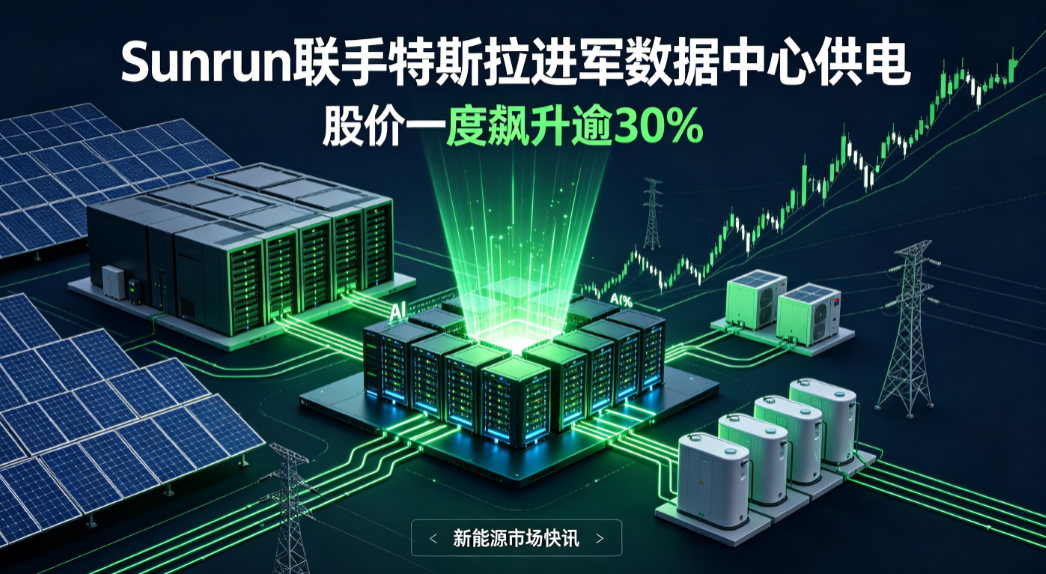
\nUnder the major trend of energy transformation, Thailand's new energy market shows vigorous development. Significant investment opportunities exist in fields such as solar energy, wind energy, energy storage, and hydrogen energy.
\n\n1. Solar Energy Field
\nThailand's solar power installed capacity increased from about 3GW in 2020 to over 10GW in 2026, with a compound annual growth rate of approximately 22%. Among them, floating solar power technology has become a development focus due to its land-saving and higher efficiency. As Thailand's leading renewable energy enterprise, Energy Absolute has successfully developed several large-scale floating solar power plants and plans to expand its solar installed capacity to 5GW in the next three years.
\n\n2. Wind Energy Field
\nThailand is rich in wind energy resources, especially in the eastern and southern coastal areas. The 89.7MW wind power project developed by Goldwind Technology and Thailand's WEH Energy adopts low wind speed unit technology, effectively improving resource utilization efficiency. According to industry analysis, Thailand's wind power installed capacity is expected to reach 15GW by 2030, with a compound annual growth rate of approximately 18%.
\n\n3. Energy Storage and Hydrogen Energy Field
\p>Energy storage technology is key to solving the intermittency problem of renewable energy. The Thai government has included energy storage in key areas of energy transformation, and it is expected that the installed capacity of energy storage will reach 5GW by 2030. PTT has announced an investment of 30 billion Thai baht to build Thailand's first large-scale hydrogen demonstration project, which is expected to be operational in 2028, laying the foundation for the development of Thailand's hydrogen energy industry. \n\nFour: Energy Stock Investment Strategy Recommendations
\nBased on the analysis of Thailand's energy market, we propose the following investment strategy recommendations for investors with different risk preferences:
\n\n1. Conservative Investors
\nFor investors with low risk tolerance, the following types of energy stocks can be focused on:
\n- \n
- Traditional Energy Giant Transformation Enterprises: Such as PTT, Bangchak Petroleum, etc. These companies have stable cash flow and resource advantages, while actively布局 new energy fields, with faster transformation steps. \n
- Utility Energy Enterprises: Such as GPSC, EGCO, etc. These companies have stable business models, are less affected by oil price fluctuations, and have higher dividend yields. \n
- Energy Infrastructure Enterprises: Such as LH, PTT ACL, etc. These companies provide energy transmission and distribution services, with stable income and less affected by energy price fluctuations. \n
2. Growth Investors
\nFor investors pursuing capital appreciation, the following types of energy stocks can be focused on:
\n- \n
- Pure New Energy Enterprises: Such as Energy Absolute, B.Grimm Power, etc. These companies have technical advantages and project experience in the fields of solar energy and wind energy, with huge growth potential. \n
- New Energy Technology Suppliers: Such as enterprises providing energy storage systems and smart grid solutions, these companies benefit from the rapid growth of new energy installed capacity. \n
- Energy Transformation Service Providers: Such as enterprises providing energy efficiency management and carbon emission reduction solutions, these companies will benefit from the deepening of Thailand's energy transformation policies. \n
3. Balanced Portfolio
\nTo achieve a balance between risk and return, investors can consider the following allocation strategies:
\n- \n
- Asset Allocation Ratio: Traditional energy accounts for 40%, new energy accounts for 40%, and energy infrastructure accounts for 20%. \n
- Industry Diversification: Diversified investment in multiple fields such as oil, natural gas, solar energy, wind energy, and energy storage. \n
- Regional Diversification: In addition to Thailand's domestic market, opportunities for Thai enterprises to expand projects in other ASEAN countries can be focused on. \n
Five: Risk Factors and Response Strategies
\nEnergy stock investment faces various risk factors, and investors should fully understand and adopt adaptive response strategies:
\n\n1. Policy Risk
\nThailand's energy policies may be adjusted with government changes, such as changes in subsidy policies, carbon tax policies, etc., which may affect corporate profitability. Investors should closely follow policy dynamics and choose enterprises with strong policy support and active transformation. \n\n
2. Technology Risk
\nNew energy technology is rapidly iterating, which may lead to the elimination of early investment technology routes. Investors should focus on corporate technology innovation capabilities and R&D investment, and choose technology-leading enterprises with independent intellectual property rights. \n\n
3. Market Risk
\nFactors such as energy price fluctuations and demand changes may lead to market risks. Investors should establish diversified investment portfolios and adjust allocation ratios in a timely manner according to market changes. \n\n
4. Geopolitical Risk
\nThailand has a high dependency on energy imports, and international geopolitical conflicts may affect energy supply and prices. Investors should pay attention to international energy security cooperation mechanisms and choose enterprises with diversified energy sources and stable supply chains. \n\n
Six: Conclusion: Seizing Investment Opportunities in the Energy Transformation Era
\nIn the second half of 2026, Thailand's energy market is in a critical period of coexistence and development between traditional and new energy. For investors, this is both challenging and contains huge opportunities. By systematically analyzing energy market trends, corporate transformation trends, and policy environments, investors can build energy stock portfolios that suit their own risk preferences.
\n\nIn the next five years, with the deepening of Thailand's energy transformation, the new energy sector will continue to grow, while the success of traditional energy enterprises' transformation will determine their competitive position in the market. Investors should maintain a long-term perspective, seize investment opportunities brought by energy transformation under the premise of controllable risks, and achieve long-term appreciation of assets.
\n\nFinally, it is worth emphasizing that energy stock investment requires professional knowledge and continuous learning. Investors should pay attention to information released by official channels such as Thailand's Ministry of Energy and SET Exchange, and at the same time combine research reports from professional institutions to continuously optimize investment strategies in order to obtain stable returns in the energy transformation era.