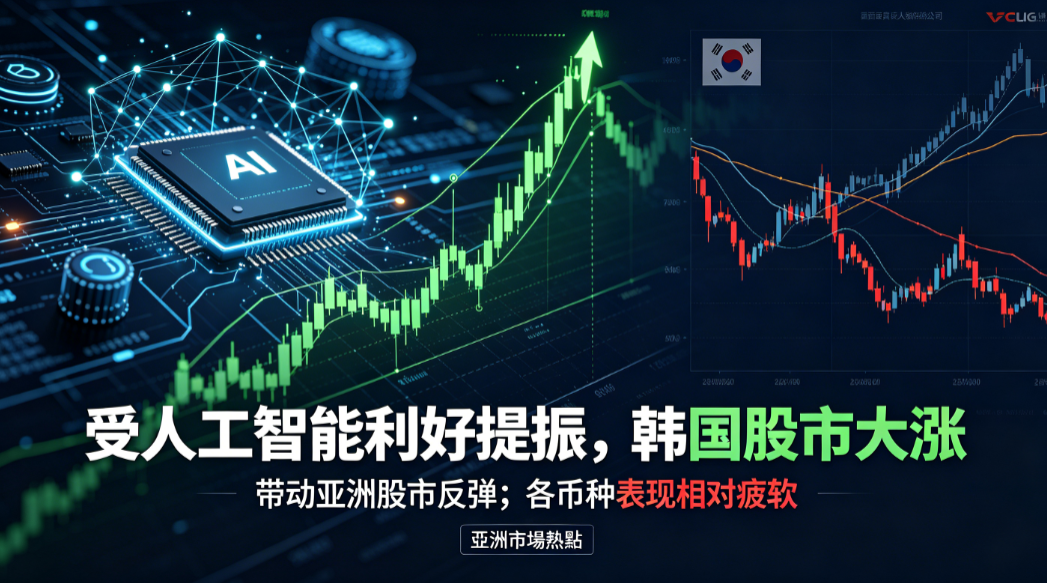

Asian Market Volatility and Tech Stock Valuation Challenges: Micron Earnings Boost Confidence, USD Strength Pressures Emerging Currencies
Keywords
Asian stocks, Micron Technology, AI valuation, USD strength, emerging market currencies
Introduction
After several days of sharp volatility, Asian stock markets rallied strongly on Thursday, boosted by a surge in South Korean stocks and Micron Technology's stellar earnings. Meanwhile, the USD continued to strengthen, putting significant pressure on Asian emerging market currencies, creating a divergence pattern of "strong stocks, weak currencies." This market dynamic not only reflects investors' reassessment of high valuations of AI-related stocks but also highlights the delicate balance between global capital flows and regional economic fundamentals.
South Korea's Dramatic Fluctuations: Cooling and Rekindling of AI Mania
The KOSPI surged up to 6% on Thursday, poised for its biggest single-day gain since June 12. This rebound built on cumulative gains of nearly 8% over two consecutive trading days, after the index plunged 10% on Tuesday, the largest single-day drop since March, triggering a global tech sell-off.
This sharp volatility fundamentally reflects concerns about overvaluation of AI-related companies. After years of rally, the P/E ratios of many AI concept stocks have been pushed to historical highs. South Korean financial regulators recently signaled that the sector's rally has shown signs of overheating, further fueling worries and prompting some investors to take profits.
However, Micron's strong quarterly earnings after the close acted as a shot in the arm, quickly reversing market sentiment. Micron's earnings not only proved sustained strong AI chip demand but also provided fundamental support for the entire tech sector. As a result, South Korea's two memory giants Samsung Electronics and SK Hynix rose 6.2% and 11.6%, respectively, becoming the main drivers of the market rally.
Micron Earnings and SK Hynix IPO: Real Portrait of AI Demand
The memory chip industry, in which Micron operates, is seen as a "thermometer" for AI infrastructure, directly reflecting real demand from data centers and cloud computing. Micron's strong performance sent a positive signal: despite macroeconomic uncertainty, the AI-driven technology upgrade wave continues to generate substantial commercial returns.
Meanwhile, SK Hynix's plan to list on the US stock market, raising up to $29.4 billion, if successful, would be one of the largest IPOs in global history. This greatly boosted sentiment, showcasing the ambition of South Korea's chip giant and providing global investors with a new channel to directly participate in AI hardware. These dynamics indicate that while market confidence in AI's long-term prospects remains, investors are becoming more discerning, demanding real earnings growth to support current valuations.
Chris Strazzeri, Financial Trading Manager at Moomoo Australia and New Zealand, noted: "Targeted selling shows that after a sustained and strong rally in AI-related and speculative growth stocks, investors are enforcing strict valuation discipline. Micron's earnings basically confirm this, powerfully lifting overall tech sector sentiment."
Taiwan and Other Asian Market Rebound
Driven by Micron earnings, Taiwan's Taiex, with its high tech weighting, also performed strongly, rising 1.6% at one point, showing a clear regional tech stock linkage. In other markets, Thailand's SET index rose over 1% after the central bank held rates steady and raised full-year growth forecasts, injecting confidence. Indonesia's composite index rose 1.5%, potentially ending a three-day losing streak, while the Manila market also rose. This broad rally together formed the overall Asian stock rebound.
USD Strength and Asian Currency Dilemma
In stark contrast to the stock market cheer, Asian emerging market currencies generally came under pressure from a strong dollar. The dollar index is heading for its largest monthly gain in nearly a year, with traders betting that a strong US economy will keep short-term rates elevated, putting continuous pressure on EM currencies.
Lloyd Chan, analyst at MUFG, noted: "Asian FX has generally weakened against the dollar since the FOMC meeting, with several ASEAN currencies leading losses. The 'higher for longer' US rate environment will likely remain a headwind for regional currencies, especially those with lower yields."
Among major Asian currencies, the Philippine peso suffered the largest loss, down 0.6%, possibly declining for the seventh time in eight sessions. The South Korean won and Taiwan dollar both eased 0.3%, while the Indonesian rupiah was flat. Notably, the Thai baht ended a six-day losing streak, edging higher. According to DBS Senior Economist Chua Hak Bin: "The recent baht weakness stems from its relatively high exchange rate and external position, which may actually support tourism and ease financing pressures for small exporters." This view highlights the dual nature of a weak currency in specific economic structures.
Additionally, the Malaysian ringgit and Indian rupee bucked the trend, both appreciating over 0.5%, showing that even under a strong dollar, currency movements are significantly influenced by each country's fundamentals.
Conclusion
Looking at the day's performance in Asian markets, two main threads are clear: one is tech stocks regaining upward momentum after valuation corrections, supported by solid AI demand; the other is the strong dollar continuing to pressure EM currencies, creating a "strong stocks, weak currencies" pattern in the region.
Going forward, market focus will remain on AI industry profitability and the Fed's policy path. For investors, while chasing tech stock rebounds, one must be wary of volatility risks from high valuations; for Asian policymakers, maintaining exchange rate stability under a strong dollar headwind and balancing export competitiveness with capital flow pressures will be a severe test. Asian financial markets are undergoing a profound shift from 'valuation-driven' to 'earnings-driven'.