
Asian Stock Markets Rally and Currencies Under Pressure: AI Sentiment Rebounds with USD Strength
Introduction
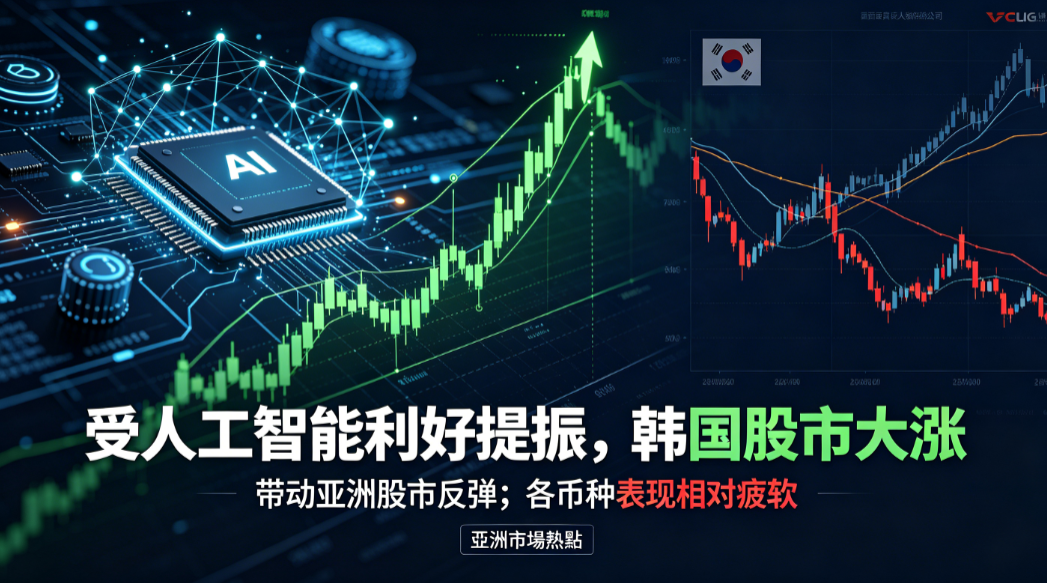
On Thursday, Asian stock markets saw a strong rally, led by South Korean stocks, pushing the MSCI Asia Emerging Markets Index up nearly 2% from its two-week low. The rally was mainly driven by Micron Technology's stellar quarterly earnings, reigniting confidence in artificial intelligence (AI) demand. However, the US dollar continued to strengthen, nearing its strongest monthly gain in almost a year, putting widespread pressure on Asian emerging market currencies, creating a complex pattern of rising stocks and falling currencies.
South Korea Stock Market Strong Rebound: Valuation Anxiety Amid Volatility
The Korea Composite Stock Price Index (KOSPI) surged up to 6% during the day, poised for its best single-day performance since June 12. The index has rebounded nearly 8% over the past two trading days, following a 10% plunge on Tuesday, the largest since March, which triggered a global tech stock sell-off. This sharp volatility reflects deep investor concerns about overvaluation of AI-related companies—after years of large gains, the market is scrutinizing actual profitability. South Korean regulatory signals about overheating further fueled cautious sentiment.
Micron Earnings Ignite AI Confidence: Chip Stocks Rise Broadly
Micron Technology's optimistic quarterly earnings, released after the close, became a key catalyst in reversing market sentiment. Driven by this, shares of Samsung Electronics (005930) and SK Hynix (000660) rose 6.2% and 11.6%, respectively. Additionally, SK Hynix's plan to raise up to $29.4 billion through a US stock listing—potentially one of the largest IPOs globally—further boosted investor confidence.
Chris Strazzeri, Financial Trading Manager at Moomoo Australia and New Zealand, noted: "Targeted selling shows that after a long and rapid rise in AI-related and highly speculative growth stocks, investors are enforcing valuation discipline. This means companies need actual earnings growth to support current high P/E ratios. Micron's strong earnings exactly confirm this, thereby lifting overall tech sector sentiment."
Other Asian Market Performance: Regional Rally and Divergence
Outside South Korea, Taiwan's Taiex (TWSE: TAIEX) rose 1.6%, also driven by tech stocks. Thailand's SET index rose over 1%, after the central bank held interest rates steady and raised economic growth forecasts, injecting confidence. Indonesia's composite index rose 1.5%, ending a three-day losing streak; the Philippine PSEi also rose. Overall, Asian stocks showed resilience with support from warming AI sentiment and improved regional fundamentals.
USD Strength Curbs Asian Currencies: Policy Dilemma Deepens
However, Asian currencies performed quite differently. The dollar is heading for its strongest monthly gain in nearly a year, as traders bet on a strong US economy supporting high short-term rates. Lloyd Chan, analyst at MUFG, said: "Asian FX has generally weakened against the dollar since the FOMC meeting last week, led by several ASEAN currencies. The 'higher for longer' US interest rate environment will likely remain a headwind for regional currencies, especially those with lower yields."
The Philippine peso led losses, falling 0.6%, possibly declining for the seventh time in eight sessions. The South Korean won and Taiwan dollar both eased 0.3%, while the Indonesian rupiah was flat. The Thai baht edged higher, snapping a six-day losing streak; the Malaysian ringgit and Indian rupee bucked the trend, both rising over 0.5%, reflecting some emerging market currencies trying to shake off dollar pressure.
Conclusion: Sentiment Stabilizes but Structural Risks Remain
In summary, this week's sharp volatility in Asian stocks reveals valuation concerns behind the AI boom, but Micron's earnings provided near-term confidence support. Meanwhile, dollar strength and high US interest rates continue to put depreciation pressure on Asian currencies, especially for economies with larger current account deficits or lower rates. Looking ahead, investors need to closely monitor whether AI companies' actual earnings can support valuations, and how central banks respond in monetary policy, to seize opportunities and avoid risks amid volatility.