Thailand's Energy Transition Acceleration: Investment Opportunities and Challenges Driven by 2030 Carbon Neutrality Goals
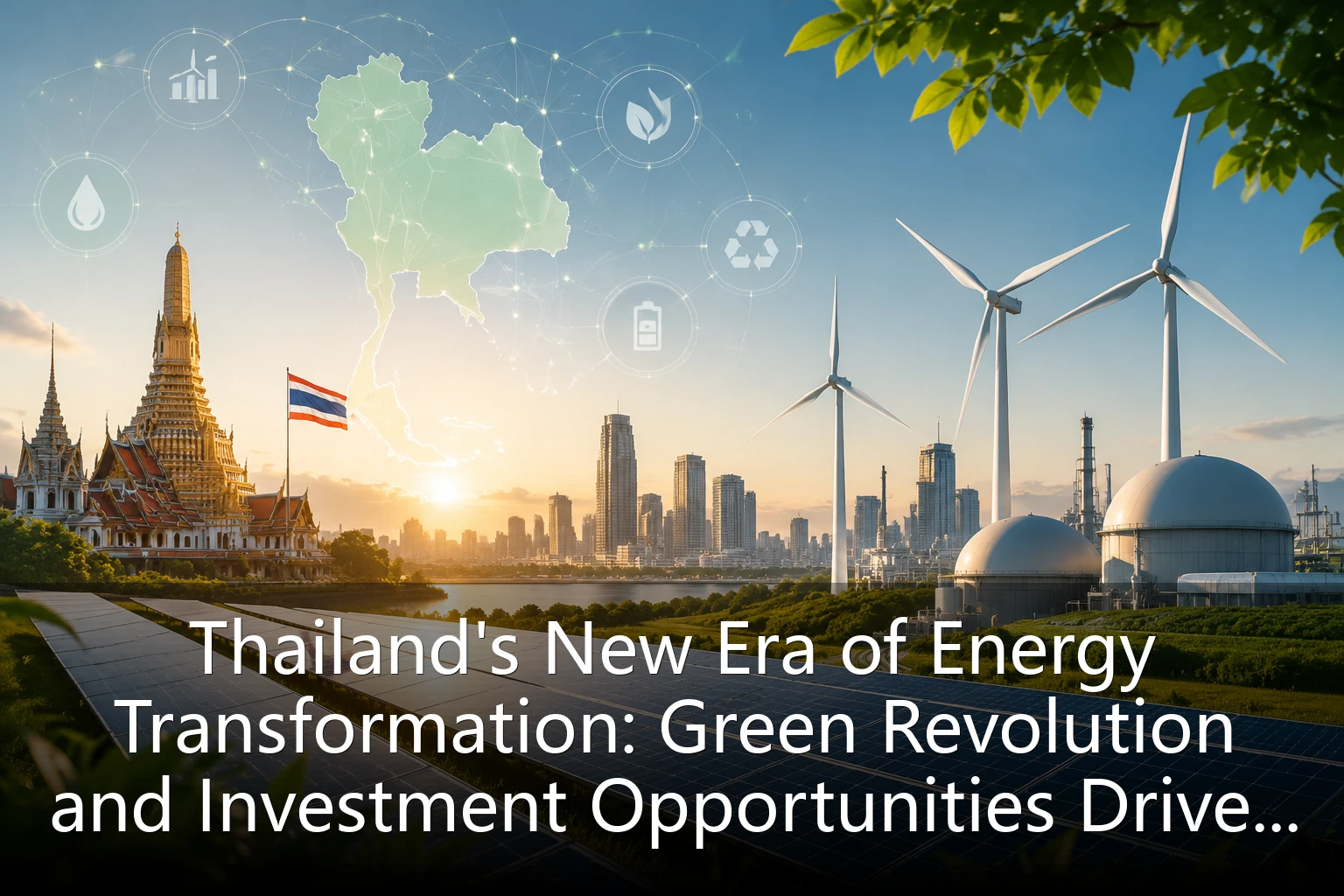
\nAgainst the backdrop of increasingly severe global climate change, the Thai government is promoting energy structure transformation with unprecedented efforts. As the second-largest economy in Southeast Asia, Thailand has committed to achieving carbon neutrality by 2030. This commitment not only reflects Thailand's responsibility to global climate change issues but also brings structural transformation opportunities to the country's energy industry. This article will deeply analyze the current situation, challenges, and opportunities of Thailand's energy transition, providing comprehensive reference for investors.

\n\nThailand's Energy Transition Policy Framework and Goals
\nThe core of Thailand's energy transition strategy is to reduce dependence on fossil fuels and vigorously develop renewable energy. According to the "Energy Development Strategy Plan (2026-2030)" issued by Thailand's Ministry of Energy, Thailand plans to increase the proportion of renewable energy to 30% by 2030, with solar power capacity reaching 15 gigawatts (GW), wind power reaching 6 GW, and biomass energy reaching 5 GW. In addition, Thailand has formulated a clear emission reduction roadmap, aiming to reduce greenhouse gas emissions by 20-25% compared to 2005 levels by 2030.
\nTo achieve these goals, the Thai government has introduced a series of incentive policies, including the Renewable Energy Feed-in Tariff (FiT), tax incentives, and land use facilitation measures. Notably, Thailand has also innovatively introduced "green bonds" and "energy transition funds" to provide diversified financing channels for renewable energy projects.
\n\nCurrent Status and Breakthroughs in Renewable Energy Development
\nIn the solar energy sector, Thailand has made significant progress. By the first half of 2026, Thailand's total solar power capacity has reached 12.3 GW, with floating solar power plants becoming a highlight. The first phase of the world's largest floating solar power plant, built by the Electricity Generating Authority of Thailand (EGAT) in Chiang Mai Province in the north, has been successfully connected to the grid with a total capacity of 500 megawatts (MW). The project not only effectively utilizes water resources but also improves the power generation efficiency of solar panels through water cooling effects, becoming a model for global floating solar technology.
\nIn the wind power sector, Thailand's east coast and northern mountainous areas are rich in wind resources, becoming key areas for wind power development. International wind power equipment manufacturers such as Goldwind have cooperated with local Thai enterprises to develop wind turbines adapted to Thailand's low wind speed characteristics. Statistics show that Thailand's total wind power capacity has reached 4.2 GW, and is expected to exceed the 6 GW target by 2027.
\nBreakthroughs in energy storage technology provide key support for large-scale application of renewable energy. The Electricity Generating Authority of Thailand (EGAT) is building the first large-scale energy storage station in Southeast Asia, adopting advanced lithium-ion battery technology with a total capacity of 500 MW/1000 MWh. The station will effectively solve the problem of intermittent renewable power generation and improve grid stability.
\n\nGreen Transformation of Traditional Energy Giants
\nAs the core of Thailand's energy industry, the state-owned oil company PTT is actively promoting business diversification and transitioning to green energy. PTT has announced plans to invest 150 billion Thai baht in renewable energy and hydrogen energy fields in the next five years, aiming for renewable energy business to account for 30% by 2030. The company has cooperated with international energy giants to build the largest green hydrogen demonstration project in Southeast Asia in southern Thailand, expected to be commercially operational by 2028.
\nIn addition, PTT has cooperated with many local Thai enterprises to develop biofuels and carbon capture and storage (CCS) technologies. These transformations not only help reduce carbon emissions but also open up new growth points for traditional energy enterprises.
\n\nInvestment Opportunities Brought by Energy Transition
\nThailand's energy transition has brought abundant investment opportunities for domestic and foreign investors. In the equipment manufacturing sector, manufacturers of solar panels, wind turbines, energy storage systems, etc. will face huge demand. Renewable energy equipment manufacturers from China, Europe and other regions have actively entered the Thai market, reducing costs and improving market competitiveness through localized production.
\nIn the project development sector, financing and development opportunities for renewable energy projects are continuously increasing. The "Renewable Energy Trust Fund" launched by the Thai government provides stable financial support for project development, attracting a large number of international investors. Statistics show that in the first half of 2026, the financing scale of renewable energy projects in Thailand has reached 800 billion Thai baht, a historic high.
\nIn the technical service sector, demand for energy digitalization, smart grids, and energy management services is growing rapidly. Many Thai technology companies are actively developing energy management systems adapted to local needs, providing energy optimization solutions for enterprises and households.
\n\nChallenges and Risks
\nAlthough Thailand's energy transition prospects are broad, it still faces many challenges. First, the intermittent power generation characteristics of renewable energy pose challenges to grid stability, requiring large-scale energy storage facilities and smart grid technology. Second, resistance from traditional energy stakeholders may slow down the transition progress. In addition, issues such as funding gaps, inconsistent technical standards, and land use disputes also need to be properly addressed.
\nFor investors, policy risks cannot be ignored. Thailand's energy policy adjustments are relatively frequent, and investors need to closely monitor policy changes and adjust investment strategies in a timely manner. At the same time, Thailand's domestic infrastructure is insufficient, especially the lag in grid upgrades and energy storage facility construction, which may affect project benefits.
\n\nFuture Outlook and Investment Recommendations
\nLooking ahead, Thailand's energy transition will continue to deepen, and renewable energy will become the dominant part of the energy structure. According to forecasts from Thailand's Ministry of Energy, by 2030, the cost of renewable energy power generation in Thailand will further decrease, expected to form a competitive advantage with traditional energy. Meanwhile, energy digitalization and intelligence will become important directions of the transition, bringing huge opportunities to related technical service enterprises.
\nFor investors, we recommend the following strategies: First, focus on renewable energy fields with strong policy support, such as solar energy, wind energy, and energy storage technology; Second, choose enterprises with technical advantages and local experience for investment; Third, consider long-term holdings to avoid interference from short-term market fluctuations; Finally, diversify allocations to spread risks, including equipment manufacturing, project development, technical services and other fields.
\nOverall, Thailand's energy transition is not only an inevitable choice to address climate change but also an important path to achieve sustainable development. For investors, grasping the trend of Thailand's energy transition will yield long-term stable returns. At the same time, investors also need to fully recognize the risks in the transition process and make adequate preparations to succeed in this energy revolution.