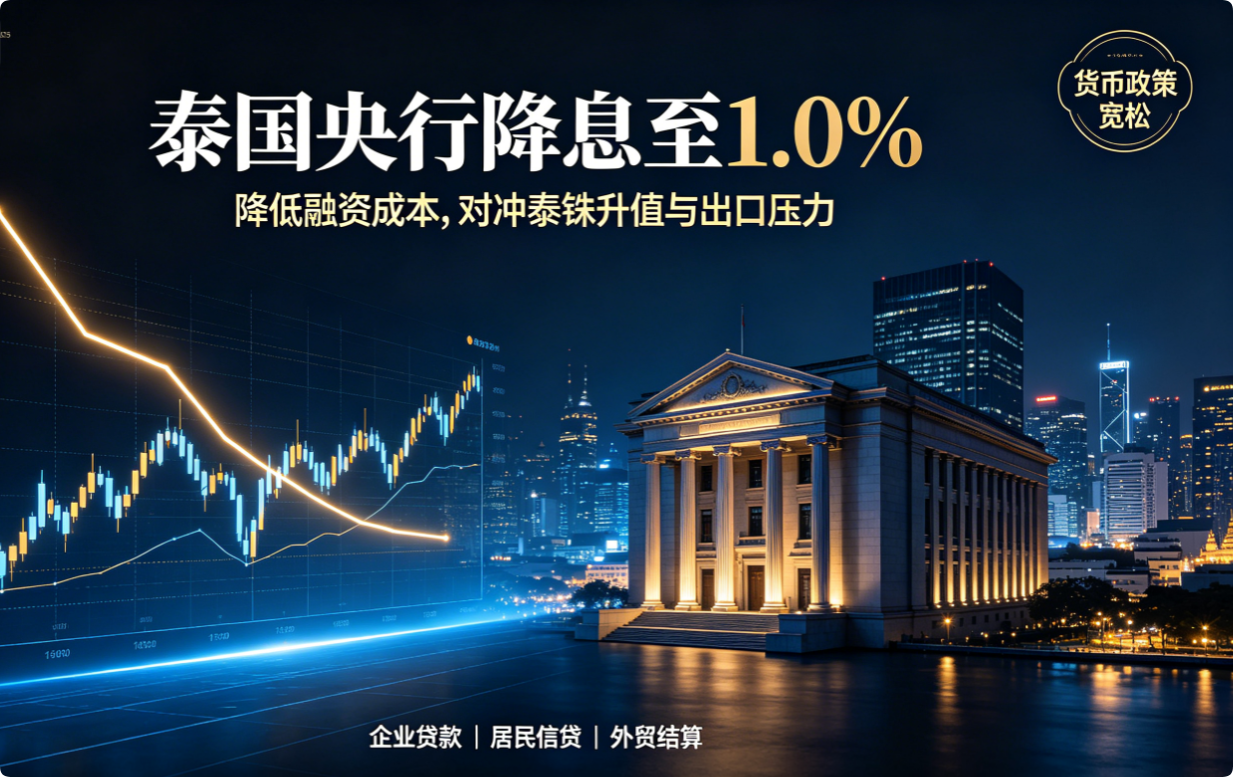

The Monetary Policy Committee (กนง.) of the Bank of Thailand held a meeting on October 16, 2024, and officially announced a cut in the national benchmark interest rate to ease the interest burden on businesses and borrowers, increase market liquidity, and alleviate economic pressure.

Breaking! Bank of Thailand Announces Rate Cut
On October 16, Mr. Sakkapop, Secretary of the Monetary Policy Committee, revealed that at the meeting, the committee voted 5:2 to reduce the interest rate from 2.50% per annum by 0.25% to 2.25% per annum.
Mr. Sakkapop stated that Thailand's overall economic growth is expected to be close to projections, and headline inflation will return to the target range by end-2024. The process of reducing the household debt-to-income ratio will continue.
Therefore, the committee believes that a neutral monetary policy stance remains appropriate for current economic and inflation trends, and the majority agreed to reduce the policy rate by 0.25% per annum, consistent with economic potential.
Additionally, the committee projects that the Thai economy may grow by 2.7% in 2024 and 2.9% in 2025, driven mainly by tourism and private consumption boosted by stimulus measures, as well as improved exports due to demand for electronic products.
In summary, economic recovery across sectors varies, with some industrial sectors facing structural pressures on goods exports, production, and SMEs.
In-Depth Analysis: Thailand Rate Cut
Earlier, Mr. Kriangkrai Thiennukul, Chairman of the Federation of Thai Industries (ส.อ.ท.), stated that the Thai economy currently faces many negative factors, particularly high household debt, insufficient purchasing power, and a lack of liquidity for most businesses, especially SMEs. At the same time, the export sector faces war risks triggered by geopolitical conflicts.
The baht appreciation is also a significant factor—currently, the baht is the second strongest appreciating currency in Southeast Asia after the Malaysian ringgit, reducing the price competitiveness of Thai products. Companies that have not hedged currency risks (e.g., forward contracts) may suffer losses.
“The above situation has also impacted corporate liquidity, as many companies have had to borrow from financial institutions to maintain operations, leading to high financial costs. Therefore, the committee's 0.25% rate cut will ease the burden on businesses and borrowers.”
“The central bank's rate cut also aligns with the global trend of declining benchmark rates. For example, the U.S. Federal Reserve recently cut its benchmark rate by 0.50%, its first cut in four years. The U.S. rate cut is one factor causing the baht to appreciate, which negatively impacts Thai exports.”
“Currently, Thailand's non-performing loans (NPLs) are worsening, with frequent seizures of homes and vehicles by financial institutions for auction, reflecting insufficient purchasing power among businesses and individuals, requiring urgent government intervention.
The rate cut will effectively reduce the financial burden on borrowers and SMEs and also help depreciate the baht, which will positively impact exporters.”
Meanwhile, Mr. Sanan Angubolkul, Chairman of the Thai Chamber of Commerce and Chairman of the Board of Trade of Thailand, also stated that interest rates are one of the costs businesses bear and that further rate cuts would greatly help businesses.
In summary, the Bank of Thailand's rate cut will bring the following positive factors:

First, Stimulate Thailand's Economic Growth:
① Promote investment: Lower interest rates reduce corporate borrowing costs, encouraging companies to invest in expanding production, upgrading equipment, or launching new projects. This boosts output and competitiveness, drives industrial upgrading and economic restructuring, and fosters overall economic growth.
② Stimulate consumption: For Thai consumers, rate cuts may lower bank deposit rates, reducing returns on savings and encouraging spending on big-ticket items like homes, cars, and appliances, or increasing spending on services such as travel and dining.
Increased consumption drives related industries and further economic growth. The "10,000 baht" handout by Prime Minister Peatongtarn to disadvantaged groups will also create a larger consumption boost.
Second, Ease Thailand's Debt Pressure:
① Reduce household debt burden: Many Thai households have large loans like mortgages and auto loans. After the rate cut, repayment pressure decreases, disposable income rises, improving household living standards and spending power, while lowering the risk of default and enhancing financial system stability.
② Lower corporate financing costs: Corporate debt burdens also ease, making it easier for companies to obtain loans at lower costs, improving their financial health, enhancing debt-servicing ability and operational stability, and preventing bankruptcy due to funding gaps.
Third, Enhance Export Competitiveness:
Hedging appreciation momentum, the rate cut leads to a relative depreciation of the local currency.
A weaker baht makes Thai exports more price-competitive in international markets, attracting more foreign buyers and increasing export volumes. Export growth drives related industries, creates jobs, and boosts economic growth.
Fourth, Support Full Recovery of Thailand's Tourism Sector:
Regardless of global economic conditions, Thailand remains a major tourist destination, and tourism is vital to its economy. The weaker baht from rate cuts lowers travel costs for foreign tourists, attracting more visitors and promoting tourism recovery and growth.
Furthermore, a thriving tourism sector not only directly increases tourism revenue but also drives related services such as dining, accommodation, and transportation.
Fifth, Strengthen Thailand's Market Confidence:
A rate cut by the Bank of Thailand is often seen as government support and stimulus, sending a positive signal to the market, boosting confidence among investors, businesses, and consumers. Enhanced market confidence helps stabilize market expectations and encourages investment and consumption, promoting stable economic growth.

Sixth, Promote Thailand's Financial Market Activity:
The rate cut directly affects fund flows and asset prices in financial markets.
Lower rates encourage investors to shift funds from bank deposits to other investment channels such as stocks, bonds, and mutual funds, increasing market liquidity and driving market activity. Ultimately, a vibrant financial market provides more financing channels for businesses, supporting the real economy.